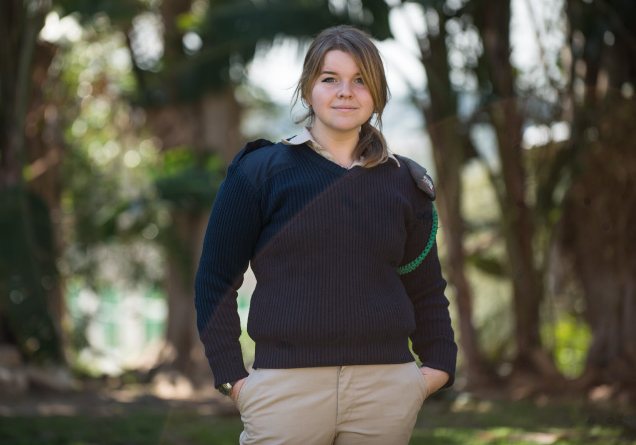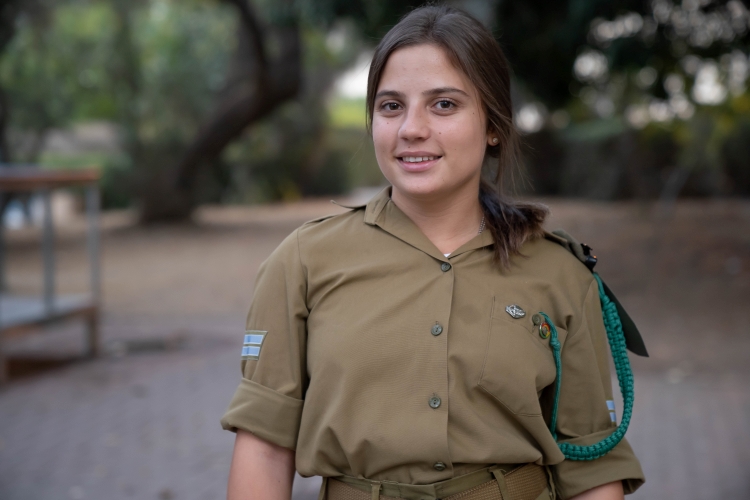
Mia’s grandfather, a Jewish activist in Romania, saw many of his friends immigrate to Israel in the 1970s. He only joined them in 1993, when he made aliyah with Mia’s grandmother and mother. Their new home was in Haifa.
Did you grow up in that kind of environment as well?
“No, it was different for me. My dad is Romanian. He came to Israel in the mid-1990s to work and earn some money. He met my mom here, they fell in love and got married. When I was three, we moved from Haifa to Ashdod, even further away from my mother’s family. We didn’t observe any kind of Jewish tradition in our home and I knew I wasn’t considered Jewish under religious law.”
Did that bother you?
“As a child, no. I just accepted that was the way things were. My dad and I traveled to Romania several times and I got to know his family – he has seven siblings, so I have many aunts and uncles and cousins. But as a teenager, I suddenly started to feel a little strange. After the Passover holiday period, for example, I’d hear my friends talking about their Seder and reading the Haggadah, exchanging experiences. All of this connected to my family’s stories about my grandparents and their semi-underground celebrations in the Soviet Union. I felt like it was a bit different for me, that I somehow didn’t really belong to the world of Judaism.”
Did you know you could convert?
“I didn’t even think about it back then. I only started seriously considering it in the army, when I got an invite to a Nativ course. Before I enlisted, I hadn’t heard anything about it. From the invite, I wasn’t really sure what it was, so I went online, started searching, and delved into the topic a bit. I found the Nativ website, read the stories of people who’d converted, and watched all kinds of videos. It was interesting. Everyone said good things about the course. I started asking my friends in the army, in case they’d heard something. That’s how I met a soldier who’d taken the course and she was also very positive about it. All of this gave me peace of mind. I decided to take the course the first chance I had.”
It took a while for Mia to get that chance, because of her job. “I’m a commander and instructor at Camp Ariel Sharon,” she explains. “It’s an interesting role with a lot of responsibilities. My unit belongings to the Technology & Maintenance Corps and I teach people in various combat support positions. For example, how to repair night vision devices, binoculars, and sights. Afterward, the soldiers return to their regular units, but some of them keep in touch with us. It’s a great, special feeling, because the course isn’t just about teaching, it’s also about helping soldiers with all kinds of problems. They usually appreciate this attitude, open up and share things with us. This role really boosted my confidence. It wasn’t easy to say goodbye and it wasn’t easy for my superiors to replace me, but I was determined to take the course. It happened a year after I enlisted.”
After all the good things you heard, what was it actually like in reality?
“It was truth in advertising, like they say. Looking back, it’s clear that passing the Nativ course really was more important than staying at my job. I’m very happy to have learned a lot about tradition, the history of Israel, and Jewish thought. I’d missed out and I feel like I’ve made up for what I missed out on before. The atmosphere in the course was great, and all the teachers and commanders were wonderful. They let everyone express themselves and be genuine, they were always very attentive and empathetic. From my personal experience, I know how tough that can be. The commanders also managed to bring us together as a team and make us all fast friends.”
Did you continue to attend seminars after the course?
“Yes, I decided to complete the whole process. I knew that the vibe of the seminars would be different from the course, but I was determined. I actually wanted to really get into it. I started fasting on Yom Kippur five years ago and it was a great feeling. I want to continue learning new things, everything related to daily life, prayers and rituals. Maybe this is how my family’s story comes full circle.”